
How ASME B16.9 Has Shaped the Butt Weld Pipe Fittings Industry: A Technical, Engineering, and Industrial Analysis

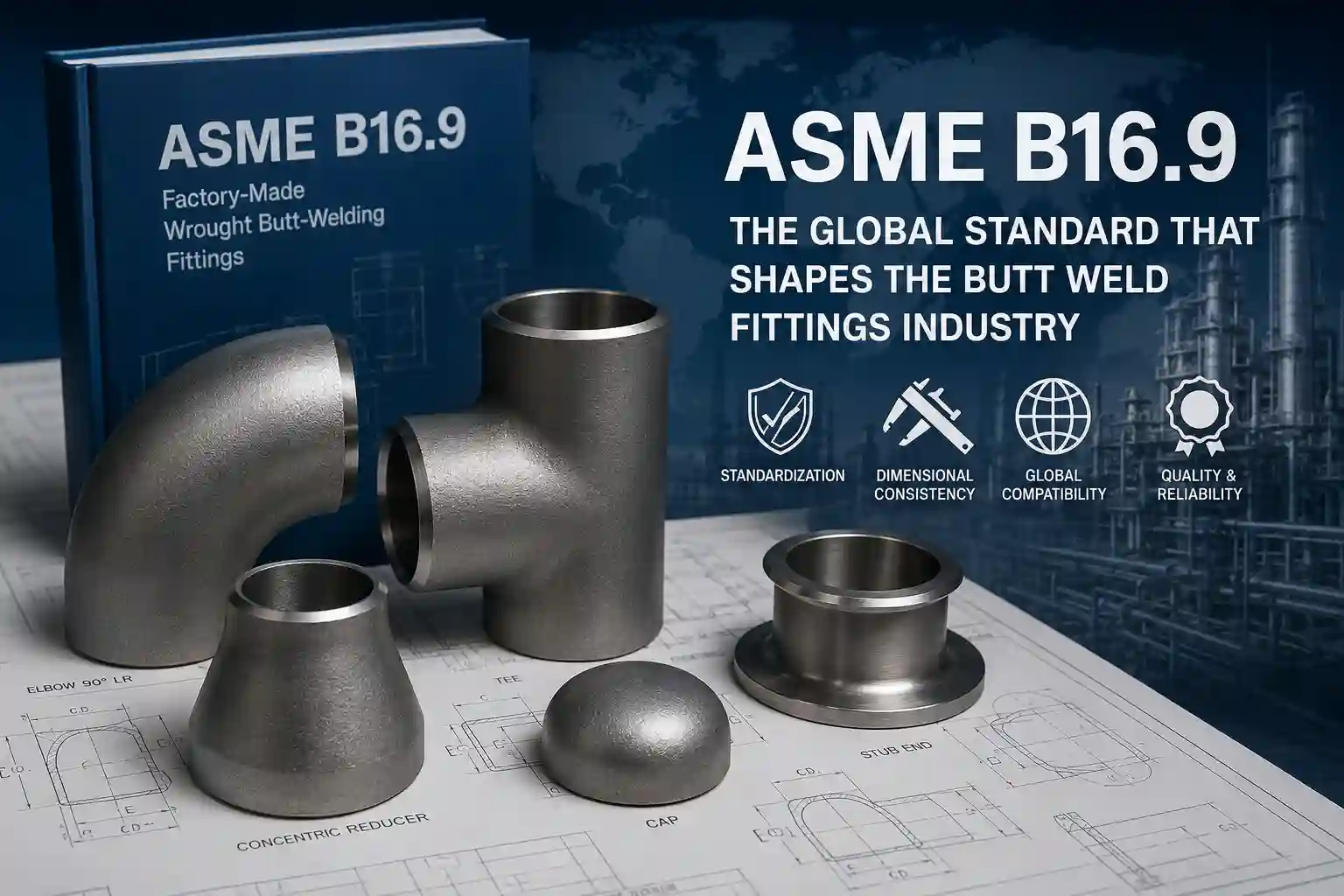
How ASME B16.9 Has Shaped the Butt Weld Pipe Fittings Industry: A Technical, Engineering, and Industrial Analysis
Executive Summary
ASME B16.9, the standard for factory-made wrought buttwelding fittings, stands as one of the most influential engineering standards in the industrial piping sector. Since its inception, this standard has fundamentally transformed how butt weld pipe fittings are designed, manufactured, inspected, and installed across the global energy and process industries. This comprehensive analysis examines how ASME B16.9 has shaped the industry through dimensional standardization, manufacturing process optimization, quality control frameworks, and its integration with complementary material and design codes.
The standard's scope, covering fittings from NPS 1/2 through NPS 48, has created a unified language for engineers, fabricators, inspectors, and procurement professionals worldwide. By establishing consistent center-to-end dimensions, bevel geometries, and radius requirements, ASME B16.9 has enabled global supply chains, reduced engineering errors, improved installation quality, and enhanced the long-term reliability of critical piping systems. This article provides a detailed engineering analysis of the standard's influence on elbows, tees, reducers, caps, and stub ends, as well as its relationship with material specifications, manufacturing technologies, quality control procedures, welding practices, and international trade.
Introduction
Industrial piping systems form the circulatory network of modern civilization, transporting hydrocarbons, chemicals, water, steam, and gases across refineries, power plants, chemical facilities, and transmission networks. Within these complex systems, butt weld fittings serve as the essential connectors that enable changes in direction, branching, diameter reduction, and flow control. These components, including elbows, tees, reducers, caps, and stub ends, must withstand extreme temperatures, high pressures, corrosive environments, and cyclic loading throughout their service life.
The development of ASME B16.9 emerged from a critical need to address widespread inconsistencies in fitting dimensions, wall thickness relationships, and bevel geometries that plagued the industry throughout the mid-twentieth century. Before this standardization, engineers could not rely on interchangeability between fittings from different manufacturers, leading to significant challenges in design, procurement, fabrication, and installation. This article examines how ASME B16.9 resolved these challenges and continues to influence the industry today.
The Historical Development of Industrial Piping Standards
The history of industrial piping standards reflects the broader evolution of engineering, manufacturing, and the energy industry itself. In the early days of oil and gas development, lack of standardization created significant obstacles to progress. Pipelines and process facilities were constructed using locally available materials with varying dimensions, quality, and mechanical properties. Engineers and operators accepted these limitations as unavoidable, but the costs in terms of engineering effort, procurement delays, fabrication errors, and maintenance challenges were substantial.
The American Society of Mechanical Engineers (ASME) recognized the urgent need for standardization in the early twentieth century. The first power piping code, ASME B31.1, was published in 1925, followed by the process piping code ASME B31.3 in 1951. However, these design codes defined minimum requirements for piping system design but did not provide detailed specifications for individual components. Manufacturers continued to produce fittings with varying dimensions, making it impossible to guarantee fit-up or to design systems with confidence.
The origin of ASME B16.9 can be traced to requests from engineers and industry organizations seeking dimensional standardization for factory-made wrought fittings. The American Standards Association (now ANSI) appointed a committee to develop standards for pipe flanges and fittings, leading to the publication of the original B16 series standards. The first edition of ASME B16.9 was published in 1950, covering wrought steel buttwelding fittings. Subsequent editions expanded the scope, refined dimensional requirements, and incorporated feedback from industry experience.
The standardization of butt weld fittings transformed the industry by providing designers with reliable dimensional data, manufacturers with consistent requirements, and contractors with interchangeable components. This transformation enabled the large-scale engineering, procurement, and construction (EPC) projects that would define the modern energy industry. Today, ASME B16.9 is recognized worldwide as the definitive standard for factory-made wrought buttwelding fittings.
Why ASME B16.9 Was Developed
The development of ASME B16.9 addressed a set of interrelated engineering, manufacturing, and commercial challenges that had become increasingly difficult to ignore as the scale and complexity of industrial projects grew.
Historical Engineering Challenges
Before ASME B16.9, engineers had no reliable reference for center-to-end dimensions, radius requirements, or bevel geometries. Each manufacturer published its own dimensional data, often with variations that made it difficult to guarantee fit-up. This created significant risks in design, as engineers could not be certain that specified fittings would align with pipe runs or other components. The resulting uncertainty led to increased conservatism in design, higher costs, and occasional failures due to misalignment and stress concentration.
Manufacturing Inconsistencies
Manufacturing variations were particularly pronounced in the production of wrought fittings. Without standardized dimensions, each manufacturer developed its own forming processes, often leading to wall thickness variations, inconsistent radii, and irregular bevel preparations. These variations affected the strength, pressure integrity, and weldability of fittings, creating risks that were difficult to quantify or control. The lack of standardization also limited competition by preventing meaningful comparison of products from different manufacturers.
Installation Problems
Field installation of pipe fittings was significantly complicated by dimensional inconsistencies. Welders and fitters encountered misalignment, gaps, and interference that required time-consuming rework. Fit-up quality, directly affecting weld quality and the long-term reliability of piping systems, was often compromised by variations in fitting geometry. The resulting delays and quality issues increased project costs and contributed to schedule overruns, particularly in complex facilities with thousands of welded connections.
Interchangeability
The ability to interchange fittings from different manufacturers, or to use fittings from a single manufacturer with confidence across multiple projects, depended entirely on dimensional consistency. Without standardization, supply chain flexibility was limited and procurement decisions were complicated by concerns about compatibility. Engineers often specified preferred manufacturers or required detailed inspections and adjustments, adding time and cost to projects.
Pressure Integrity
Pressure-containing components must satisfy consistent strength requirements to ensure safety and reliability. Variations in wall thickness, radius geometry, and bevel design could significantly affect the pressure capacity of fittings. Without standardized requirements, engineers could not reliably calculate the allowable pressures of fittings or compare the pressure ratings of products from different manufacturers. ASME B16.9 addressed this by defining minimum wall thickness requirements based on standard pipe schedules, ensuring consistent pressure integrity across manufacturers.
Maintenance Challenges
During the operational phase, maintenance and repair activities require replacement fittings with geometries that match existing piping systems. Without standardization, finding suitable replacements was difficult, often requiring custom fabrication or extensive modifications. This increased maintenance costs, extended downtime, and created safety risks. ASME B16.9 provided the basis for interchangeable replacement parts, simplifying maintenance and reducing lifecycle costs. For more information, see our maintenance and repair piping guide.
Safety Improvements
The safety of piping systems depends on consistent design, high-quality manufacturing, and reliable installation. Dimensional standardization contributed to safety by ensuring predictable fit-up, reducing stress concentrations, and minimizing the risk of weld defects. Furthermore, the standard's requirements for bevel preparation, surface finish, and marking contributed to quality assurance throughout the supply chain.
Engineering Economics
Perhaps the most significant benefit of ASME B16.9 has been its contribution to engineering economics. Standardization reduces engineering effort by providing designers with reliable dimensional data and eliminating the need for custom specifications. It reduces manufacturing costs through economies of scale and consistent process requirements. It reduces procurement costs through competitive bidding and supply chain flexibility. It reduces installation costs through predictable fit-up and fewer field modifications. And it reduces lifecycle costs through improved reliability, easier maintenance, and standardized replacement parts.
The Engineering Philosophy Behind ASME B16.9
The engineering philosophy underlying ASME B16.9 extends far beyond simple dimensional standardization. The standard embodies a comprehensive approach to quality, reliability, and system performance that has shaped the entire industry.
Standardization as a Foundation
At its core, ASME B16.9 is built on the principle that standardization enables quality, efficiency, and safety. By defining consistent dimensional requirements, the standard creates a common language for engineers, manufacturers, and installers, eliminating ambiguity and reducing errors. This foundation enables more efficient engineering, more reliable manufacturing, and higher-quality installations across the industry.
Reliability through Consistency
Reliability in piping systems depends on consistent design, manufacturing, and installation. ASME B16.9 contributes to reliability by ensuring that fittings from different manufacturers, or from the same manufacturer at different times, have consistent geometry and properties. This consistency reduces the risk of unexpected failure due to variations in stress distribution, fatigue life, or corrosion resistance.
Maintainability and Lifecycle Considerations
The standard's focus on dimensional standardization extends to the entire lifecycle of the piping system. During maintenance and repair, standardized fittings provide the compatibility needed for efficient replacement. The standard's marking and documentation requirements support traceability, which is essential for effective asset management and regulatory compliance.
Compatibility and Interchangeability
ASME B16.9 is designed to ensure compatibility between fittings and other piping components, including pipe, flanges, valves, and specialty components. By defining dimensional relationships based on standard pipe schedules, the standard ensures that fittings fit correctly with pipe of the same schedule, regardless of manufacturer. This interchangeability is essential for efficient design, procurement, fabrication, and maintenance.
Risk Reduction
Every engineering decision involves trade-offs between performance, cost, and risk. ASME B16.9 reduces risk by eliminating uncertainties associated with fitting geometry. Engineers can design with confidence, knowing that specified fittings will have predictable dimensions and properties. Manufacturers can produce with confidence, knowing that compliance with the standard ensures product acceptability. And operators can operate with confidence, knowing that standard-compliant fittings have been designed, manufactured, and installed to consistent requirements.
How ASME B16.9 Transformed Butt Weld Fittings Design
ASME B16.9 fundamentally transformed the design of every major category of butt weld fittings by defining consistent dimensions, geometries, and relationships that engineers and manufacturers rely on worldwide.
Elbows
Elbows, the most common type of butt weld fitting, are manufactured in two principal radii: long radius (LR) and short radius (SR). ASME B16.9 defines the center-to-end dimensions for both types across the full range of nominal pipe sizes (NPS 1/2 through NPS 48). Long radius elbows, with center-to-end dimensions equal to 1.5 times the nominal diameter, are specified for most applications due to their lower pressure drop, smoother flow, and reduced erosion. Short radius elbows, with center-to-end dimensions equal to the nominal diameter, are used where space limitations dictate tighter turning radius.
The standard defines not only the center-to-end dimensions but also the radius of curvature, wall thickness requirements, and bevel preparation. For long radius elbows, the radius of curvature must be at least 1.5 times the nominal diameter for sizes NPS 14 and larger. For short radius elbows, the radius of curvature must be at least equal to the nominal diameter. These geometric requirements directly affect stress distribution, flow characteristics, and overall mechanical performance. For more detailed guidance on elbow selection, refer to our Elbow 45° vs 90° Selection Guide.
ASME B16.9 also addresses the relationship between elbow geometry and stress concentration factors (SCFs). Fittings with irregular geometry, such as short radius elbows, require careful stress analysis and may require additional wall thickness to compensate for stress intensification. The standard provides guidance on these relationships, enabling engineers to perform accurate stress analyses and ensure safe design.
Understanding the differences between seamless vs welded elbows is essential for proper material selection, and our elbow manufacturing methods guide provides further insight into production processes.
Tees
Tees are used to create branch connections in piping systems, and their design is particularly critical due to the complex stress patterns at the branch intersection. ASME B16.9 defines the center-to-end dimensions for straight and reducing tees, as well as the minimum wall thickness requirements. The standard addresses the reinforcement required at the branch intersection to maintain pressure integrity and resist stress concentrations.
Key dimensional parameters defined by the standard include: the center-to-end dimension for the run (A dimension), which typically equals 1.5 times the nominal diameter for long radius fittings; the center-to-end dimension for the branch (B dimension), which equals the A dimension for standard tees; and the reinforcement area required to compensate for material removed at the branch opening. These dimensions and requirements are critical for ensuring the pressure integrity and reliability of branch connections.
Reducers
Reducers are used to transition between different pipe sizes in a piping system. ASME B16.9 defines the dimensional requirements for two principal types: concentric reducers and eccentric reducers. Concentric reducers maintain a common centerline, which is preferred in vertical piping where uniform support and symmetrical loading are desired. Eccentric reducers maintain a common bottom or top line, which is often used in horizontal piping to maintain proper drainage or to ensure that the flow is not disrupted by entrained gases.
For both types, the standard defines the length of the reducer based on the nominal sizes of the connecting pipe. The length must be sufficient to accommodate the gradual change in diameter without causing excessive turbulence or pressure drop. The standard also addresses the wall thickness of reducers, which must be at least equivalent to the wall thickness of the connecting pipe at each end, with a smooth transition between the two.
Caps
Caps are used to close the end of a pipe, providing a seal for hydrostatic testing, temporary closure, or permanent termination. ASME B16.9 defines the dimensions of caps, including the length, wall thickness, and the shape of the dome or flat end. The standard ensures that caps have sufficient strength to withstand the full operating pressure of the piping system and are suitable for attachment by butt welding.
Stub Ends
Stub ends are used with lap joint flanges to create flange connections where welding directly to a flange is undesirable or impossible. ASME B16.9 defines the dimensions of stub ends, including the length of the stub, the thickness of the lap, and the radius at the lap edge. These dimensions are critical for ensuring compatibility with lap joint flanges and maintaining the pressure integrity of the connection.
Influence on Dimensional Standardization
The most visible and perhaps most significant contribution of ASME B16.9 has been its comprehensive dimensional standardization of butt weld fittings. This standardization has transformed every aspect of the industry, from engineering design to manufacturing, installation, and maintenance.
Center-to-End Dimensions
Center-to-end dimensions are the critical parameters that determine how a fitting fits into a piping system. For elbows, the center-to-end dimension defines the distance from the center of the fitting to each end. For tees, it defines the distance from the center of the run to the end of the run and the end of the branch. For reducers, it defines the total length of the fitting. ASME B16.9 provides tables of center-to-end dimensions for all fitting types and sizes, ensuring consistency across manufacturers and projects.
| Nominal Pipe Size (NPS) | Outside Diameter (in) | Center-to-End (in) – LR | Center-to-End (in) – SR |
|---|---|---|---|
| 1/2 | 0.840 | 1.50 | 1.00 |
| 3/4 | 1.050 | 1.50 | 1.00 |
| 1 | 1.315 | 1.50 | 1.00 |
| 1 1/2 | 1.900 | 2.25 | 1.50 |
| 2 | 2.375 | 3.00 | 2.00 |
| 3 | 3.500 | 4.50 | 3.00 |
| 4 | 4.500 | 6.00 | 4.00 |
| 6 | 6.625 | 9.00 | 6.00 |
| 8 | 8.625 | 12.00 | 8.00 |
| 10 | 10.750 | 15.00 | 10.00 |
| 12 | 12.750 | 18.00 | 12.00 |
Outside Diameter Compatibility
ASME B16.9 bases its fitting dimensions on standard pipe outside diameters, as defined in ASME B36.10M for welded and seamless wrought steel pipe. This ensures that fittings are compatible with pipe of the same nominal size, regardless of pipe schedule. The standard defines the outside diameter of fittings at each end, which must be within specified tolerances of the corresponding pipe outside diameter. This compatibility is essential for achieving consistent fit-up and proper welding.
Wall Thickness Relationships
The wall thickness of fittings, specified in the standard, ensures that fittings have adequate strength to withstand the service pressure of the connected pipe. For most fittings, the wall thickness must be at least the nominal wall thickness of the connecting pipe, considering manufacturing tolerances. In certain cases, such as large diameter fittings or fittings with complex geometries, the standard requires additional wall thickness to compensate for stress intensification.
Bevel Preparation
The bevel geometry on the ends of butt weld fittings is critical to achieving a high-quality welded joint. ASME B16.9 defines the bevel angles, root faces, and other parameters that must be provided on all fittings intended for butt welding. The standard specifies a bevel angle of approximately 37.5 degrees with a root face of 1/16 inch for most wall thickness ranges. This bevel geometry is optimized for manual or automatic welding and ensures complete penetration and proper fusion.
Fit-up Accuracy
Accurate fit-up between fittings and pipe is essential for achieving high-quality welds and maintaining pressure integrity. ASME B16.9 contributes to accurate fit-up by ensuring consistent center-to-end dimensions, outside diameters, and bevel geometries. The standard also specifies tolerances for these parameters, allowing some manufacturing variation while ensuring sufficient accuracy for successful fit-up and welding.
Construction Efficiency
Dimensional standardization has substantially improved construction efficiency by eliminating the need for custom fitting dimensions, reducing fit-up issues, and enabling prefabrication. With consistent dimensional data, designers can create accurate isometric drawings, fabricators can pre-assemble piping spools, and construction teams can install components with confidence. These efficiencies reduce project duration, lower costs, and improve safety.
Influence on Manufacturing Processes
ASME B16.9 has profoundly influenced the manufacturing technologies used to produce butt weld fittings. The standard's dimensional requirements have driven the development of advanced forming processes, heat treatment methods, quality control procedures, and automation technologies. Our comprehensive elbow manufacturing methods guide provides additional detail on these processes.
Hot Forming
Hot forming is the primary method for producing wrought fittings, particularly for larger sizes and thicker walls. The process involves heating steel to forging temperatures (typically 1,950–2,200°F) and forming it into the desired shape using dies, mandrels, or hydraulic presses. ASME B16.9 has influenced hot forming by defining the dimensional tolerances that must be maintained, requiring careful control of forming temperatures, and specifying the heat treatment required to restore the original mechanical properties.
Cold Forming
Cold forming is used for smaller fittings and thinner walls, where the material can be formed at room temperature without excessive force. The process uses specialized dies and mandrels to deform the steel into the fitting shape. ASME B16.9 has influenced cold forming by defining the wall thickness requirements that must be maintained, requiring careful control of the forming process to avoid excessive thinning or buckling.
Mandrel Forming
Mandrel forming is a specialized technique used for elbows and other curved fittings. A mandrel, typically a cylindrical tool with a radius corresponding to the desired elbow radius, is inserted into the pipe and used to guide the forming process. ASME B16.9 has influenced mandrel forming by defining the radius requirements that must be maintained, requiring specialized mandrel designs and careful process control.
Hydraulic Forming
Hydraulic forming uses high-pressure fluids to expand pipe sections into the desired fitting shape. This process is particularly effective for tees, where the branch connection can be hydraulically formed from the main pipe section. ASME B16.9 has influenced hydraulic forming by defining the wall thickness and reinforcement requirements that must be achieved, requiring precise control of forming pressures and fluid temperatures.
Heat Treatment
Heat treatment is essential for ensuring that formed fittings have the required mechanical properties and are suitable for service. ASME B16.9 specifies the heat treatment requirements that must be met, depending on the material grade and service conditions. Common heat treatments include normalizing, annealing, stress relief, and quenching and tempering. The standard has influenced heat treatment practices by defining the properties that must be achieved and the testing required to verify them.
Automation and CNC Manufacturing
Modern manufacturing of butt weld fittings relies heavily on automation and computer numerical control (CNC) technology. CNC lathes, milling machines, and machining centers are used to achieve the precise dimensions, bevel geometries, and surface finishes required by ASME B16.9. The standard's dimensional requirements have driven the development of specialized tooling and programming techniques that enable high-volume production with consistent quality.
Relationship Between ASME B16.9 and Material Standards
ASME B16.9 complements material standards rather than replacing them. The standard defines the dimensional requirements for fittings but relies on material specifications for the mechanical and chemical properties of the steel. This relationship between dimensional and material standards is essential for ensuring the quality, reliability, and performance of fittings.
ASTM A234 WPB
ASTM A234 is the primary material standard for carbon steel buttwelding fittings. The standard covers fittings made from wrought carbon steel and alloy steel, specifying chemical composition, mechanical properties, and heat treatment requirements. ASTM A234 WPB, the most common grade, is used for pressure piping applications at temperatures from -20°F to 800°F. ASME B16.9 references ASTM A234 as the appropriate material standard for carbon steel fittings, ensuring that fittings meeting the dimensional requirements of B16.9 also meet the material requirements of A234.
ASTM A420 WPL6
ASTM A420 WPL6 is the standard for low-temperature carbon steel fittings, used in cryogenic and low-temperature applications. The standard specifies materials that maintain their toughness and ductility at temperatures as low as -50°F. ASME B16.9 references ASTM A420 for low-temperature service, ensuring that fittings designed for these challenging conditions have both the correct dimensions and appropriate material properties.
ASTM A403 WP304 / WP316
ASTM A403 covers stainless steel buttwelding fittings, including grades WP304, WP316, and higher alloys. These materials are used in corrosive service, high-temperature applications, and where product purity is essential. ASME B16.9 references ASTM A403 for stainless steel fittings, ensuring compatibility between dimensional and material requirements.
ASTM A860 and MSS SP-75
ASTM A860 and MSS SP-75 cover high-strength, low-alloy steel fittings used in high-pressure and critical service applications. These fittings have enhanced mechanical properties compared to standard carbon steel fittings and are used in pipelines, pressure vessels, and other demanding applications. ASME B16.9 references these standards for high-strength fittings, ensuring that the enhanced material properties are matched with appropriate dimensions and geometries.
API 5L and ASTM Pipe Standards
ASME B16.9 also relates to pipe standards such as API 5L (for line pipe) and ASTM A106, A53, and A335 (for pressure pipe). The standard ensures that fittings are compatible with pipe of the same nominal size and schedule, regardless of the pipe specification. This compatibility is essential for achieving consistent fit-up and proper welding.
Influence on Quality Control and Inspection
ASME B16.9 has established a comprehensive framework for quality control and inspection that ensures the reliability of butt weld fittings. This framework addresses everything from raw material verification to final dimensional inspection and certification.
Detecting counterfeit or substandard fittings is a critical concern in the industry. Our guide on how to detect fake welding fittings provides essential information for quality assurance professionals.
Dimensional Inspection
Dimensional inspection ensures that fittings meet the dimensional requirements defined by ASME B16.9. This includes verification of center-to-end dimensions, outside diameters, wall thicknesses, bevel geometries, and other critical parameters. The standard specifies tolerances for each dimension, allowing some manufacturing variation while ensuring sufficient accuracy for successful fit-up and welding.
Visual Inspection
Visual inspection is performed to identify surface defects that could affect the performance or reliability of fittings. ASME B16.9 requires that fittings be free from cracks, pitting, blistering, and other defects that could compromise pressure integrity. The standard also addresses the quality of surface finish, which must be suitable for welding and any required coating.
Positive Material Identification (PMI)
PMI is the process of verifying the chemical composition of materials to ensure that they match the specified grade. This is particularly important for fittings used in corrosive service, high-temperature applications, and where product purity is essential. ASME B16.9, in conjunction with material standards, requires that materials be verified by PMI, ensuring that only materials meeting the specified requirements are used in fittings.
Non-Destructive Testing (NDT)
Non-destructive testing methods are used to detect defects that are not visible to the naked eye. ASME B16.9 does not typically require NDT for all fittings but specifies that, when required by the design code, NDT must be performed in accordance with applicable standards. Common NDT methods include radiographic testing (RT), ultrasonic testing (UT), magnetic particle testing (MT), and liquid penetrant testing (PT).
Hydrostatic Testing
Hydrostatic testing is sometimes required to verify the pressure integrity of fittings, particularly for larger sizes or higher pressure ratings. ASME B16.9 does not require hydrostatic testing for all fittings but specifies that when testing is required, it must be performed in accordance with applicable standards and procedures.
Traceability
Traceability is essential for quality assurance and regulatory compliance. ASME B16.9 requires that fittings be marked with the manufacturer's name or symbol, the material grade, the size, and the standard designation. This marking enables traceability from the manufacturer to the installed component, supporting quality assurance and facilitating any required root cause analysis in the event of failure.
Influence on Welding and Installation
ASME B16.9 has profoundly influenced welding and installation practices through its dimensional requirements, bevel geometries, and quality assurance requirements. For a detailed analysis of welding issues, refer to our welded joint leak case study.
Fit-up and Alignment
Accurate fit-up between fittings and pipe is essential for achieving high-quality welds and maintaining pressure integrity. ASME B16.9 contributes to accurate fit-up by ensuring consistent center-to-end dimensions, outside diameters, and bevel geometries. The standard's dimensional tolerances ensure that components are compatible and that fit-up issues are minimized.
Root Gap
The root gap, the space between the two pieces to be welded, is critical to achieving complete penetration and proper fusion. ASME B16.9 defines the bevel geometry that must be provided on fittings, which is designed to provide an appropriate root gap for manual or automatic welding. The standard's requirements for bevel angle, root face, and land preparation ensure that the root gap is consistent and appropriate for the welding process being used.
Bevel Preparation
The bevel preparation specified by ASME B16.9 is optimized for manual or automatic welding. The standard defines the bevel angle, root face, and other parameters that must be provided on all fittings intended for butt welding. These parameters are based on welding industry experience and are designed to achieve complete penetration and proper fusion without excessive weld metal deposition.
Residual Stress Management
Welding induces residual stresses in the material, which can affect its performance and reliability. ASME B16.9 addresses residual stress by specifying the material properties that must be achieved and the heat treatment that must be performed. These requirements ensure that fittings maintain their mechanical properties after welding and are resistant to stress corrosion cracking and other failure mechanisms.
Influence on Piping System Performance
ASME B16.9 has a significant influence on the overall performance of piping systems, affecting everything from pressure integrity and flow efficiency to maintenance and reliability.
Pressure Integrity
Pressure integrity is the most fundamental performance requirement for any piping system. ASME B16.9 contributes to pressure integrity by ensuring that fittings have adequate wall thickness, consistent geometry, and appropriate material properties to withstand the service pressure. The standard's requirements for reinforcement, stress distribution, and quality assurance all support pressure integrity.
Flow Characteristics
The geometry of fittings affects the flow characteristics of the piping system, influencing pressure drop, erosion, and heat transfer. ASME B16.9 contributes to predictable flow characteristics by defining the geometry of fittings, including the radius of curvature for elbows and the gradual transition for reducers. These geometric requirements reduce turbulence, minimize pressure drop, and improve flow efficiency.
Thermal Expansion
Thermal expansion and contraction of piping systems induce stress in fittings, which can cause fatigue, creep, or failure. ASME B16.9 addresses thermal expansion by specifying material properties and geometries that resist thermal stress. The standard's requirements for fitting geometry ensure that stresses are distributed evenly, minimizing the risk of failure due to thermal cycling.
Applications in Engineering Projects
ASME B16.9 is applied across a wide range of engineering projects, each with its own specific requirements, challenges, and industry context.
For procurement guidance, see our welding fittings procurement guide and pipe fittings market analysis. For maintenance and repair considerations, refer to our maintenance and repair piping resource.
Oil Refineries
Oil refineries process crude oil into fuels, lubricants, and chemical feedstocks. Piping systems in refineries are subject to high temperatures, pressures, and corrosive conditions. ASME B16.9 fittings are used throughout refineries, from process units to tank farms, where their reliability and consistency are essential for safe and efficient operations.
Gas Transmission Pipelines
Gas transmission pipelines transport natural gas across continents, operating at high pressures over long distances. ASME B16.9 fittings are used in these pipelines, where their consistent dimensions and reliable performance are essential for maintaining pressure integrity and ensuring safe operation.
Petrochemical Plants
Petrochemical plants produce chemicals from petroleum feedstocks through various processes, including cracking, reforming, and polymerization. ASME B16.9 fittings are used in these plants, where they must withstand high temperatures, pressures, and corrosive conditions while ensuring product purity.
Offshore Platforms
Offshore oil and gas platforms operate in challenging environments, subject to corrosive seawater, dynamic loads, and extreme weather. ASME B16.9 fittings used in these applications must meet stringent quality requirements and are often subject to additional inspections and material qualifications.
Power Plants
Power generation facilities, including combined cycle and nuclear plants, use high-pressure steam and high-temperature piping. ASME B16.9 fittings are essential for these systems, where reliability and pressure integrity are paramount.
Hydrogen Projects
With the growing focus on hydrogen as a clean energy carrier, fittings for hydrogen service are becoming increasingly important. ASME B16.9 provides the dimensional foundation for these fittings, but additional material and design considerations are required to address hydrogen embrittlement and high-pressure hydrogen service.
Engineering Limitations of ASME B16.9
ASME B16.9 is a comprehensive standard but has specific limitations that must be understood by engineers, designers, and procurement professionals. The standard does not define all aspects of fitting design and performance, and it must be used in conjunction with other standards to ensure a safe and reliable piping system.
ASME B31.3
ASME B31.3, the process piping code, is the primary design code for the design and installation of piping systems. While ASME B16.9 defines the dimensional requirements for fittings, ASME B31.3 provides the design requirements, including minimum wall thickness, stress analysis, and material selection. Engineers must apply both standards to ensure a safe and reliable piping system.
ASME B31.1
ASME B31.1, the power piping code, is the primary design code for power generation applications. The code includes requirements for the design and installation of piping systems in power plants, including both nuclear and fossil fuel plants. ASME B16.9 fittings used in power applications must also comply with the requirements of ASME B31.1.
ASME Section IX
ASME Section IX, the welding qualification standard, provides the requirements for welding procedures and welder qualifications. While ASME B16.9 defines the bevel geometry and dimensional requirements for fittings, ASME Section IX ensures that the welding procedures used to join fittings to pipe are qualified and that welders are properly trained and tested.
Material Standards
ASME B16.9 does not define material requirements; it relies on material standards such as ASTM A234, ASTM A403, ASTM A420, and others for mechanical and chemical properties. Engineers must select the appropriate material standard for the service conditions and ensure that fittings meet both dimensional and material requirements.
API and MSS Standards
In some applications, additional API or MSS standards may apply. For example, API 5L for line pipe or MSS SP-75 for high-strength fittings have requirements that complement ASME B16.9. Engineers and procurement professionals must be aware of these additional standards when specifying fittings for specific applications.
Future of Butt Weld Fittings Standards
ASME B16.9 has evolved over its history to address changing industry needs and technological advances. The standard's future evolution will be driven by technological developments, industry trends, and environmental considerations that are reshaping the energy industry.
For insights into market trends, see our global steel market for butt weld fittings analysis and international product offerings.
Industry 4.0
Industry 4.0, the fourth industrial revolution, is transforming manufacturing through digitalization, automation, and data integration. The application of Industry 4.0 technologies to fitting manufacturing is likely to drive changes to ASME B16.9, including tighter tolerances, advanced quality control requirements, and enhanced traceability.
Artificial Intelligence
AI-assisted design and manufacturing are beginning to affect fitting manufacturing, with AI used for process optimization, defect detection, and quality control. These technologies are likely to influence future editions of ASME B16.9 by enabling more precise manufacturing and more rigorous inspection.
Hydrogen Infrastructure
Hydrogen infrastructure represents a significant growth area for butt weld fittings, with hydrogen pipelines, storage facilities, and process plants requiring reliable fittings that maintain their properties in hydrogen service. The unique challenges of hydrogen service, including hydrogen embrittlement and the required leak tightness, will likely drive future revisions to ASME B16.9.
Sustainable Manufacturing
Environmental sustainability is becoming increasingly important in manufacturing. Future editions of ASME B16.9 may address sustainability requirements, such as reduced energy consumption in manufacturing, lower carbon footprint of materials, and improved recyclability of fittings.
Practical Recommendations
For Mechanical Engineers
- Use the latest edition of ASME B16.9 for all design and procurement activities
- Always verify the material grade, size, and schedule of fittings
- Apply proper stress analysis to account for stress concentration at fittings
- Consider corrosion and erosion allowances in fitting design
- Specify appropriate material grades for the service conditions
- Refer to our Elbow Selection Guide for proper elbow selection
For Manufacturers
- Maintain rigorous quality control to meet ASME B16.9 tolerances
- Implement proper heat treatment to achieve specified mechanical properties
- Use positive material identification to verify material grade
- Maintain detailed records of manufacturing parameters and inspection results
- Ensure traceability of fittings from raw material to finished product
- Stay updated with the latest edition of the standard
For Procurement Engineers
- Specify ASME B16.9 fittings with material grade and size clearly
- Require mill test certificates and material traceability documentation
- Review our procurement guide for comprehensive purchasing advice
- Consider counterfeit detection in quality assurance
For EPC Contractors
- Ensure that all fittings comply with ASME B16.9 and applicable project specifications
- Implement quality control procedures for receiving, storage, and installation
- Maintain accurate records of fitting identification and traceability
- Use proper welding procedures for butt weld fittings
Common Mistakes to Avoid
- Using fittings that do not meet ASME B16.9 dimensional requirements
- Mixing fittings from different manufacturers without verifying compatibility
- Ignoring material grade requirements
- Failing to verify bevel preparation before welding
- Not using the latest edition of the standard
Final Engineering Conclusions
ASME B16.9 has fundamentally shaped the butt weld pipe fittings industry through its comprehensive dimensional standardization, quality assurance requirements, and integration with complementary material and design standards. The standard has transformed engineering design, manufacturing processes, installation practices, and inspection procedures, enabling the modern energy industry to operate safely and efficiently.
The standard's influence extends far beyond its technical provisions, affecting international trade, supply chain integration, EPC project execution, and industrial safety. By creating a common language for engineers, manufacturers, and installers worldwide, ASME B16.9 has enabled global supply chains and supported the development of large-scale energy infrastructure projects that define modern civilization.
As the industry evolves toward hydrogen infrastructure, carbon capture, and sustainable manufacturing, ASME B16.9 will continue to play a vital role. The standard will need to adapt to address new material grades, emerging inspection technologies, and increasingly stringent safety requirements. However, the fundamental engineering philosophy underlying ASME B16.9, based on dimensional standardization, quality assurance, and compatibility with complementary standards, will remain essential for the industry's continued success.
Ultimately, ASME B16.9 is more than a standard. It is a framework for engineering quality and reliability that has shaped the industry and will continue to guide its development into the future. Engineers, manufacturers, procurement professionals, and project owners must understand its provisions, apply them correctly, and contribute to its evolution as the industry continues to advance.
For additional resources and product information, visit the Iran Etesal International page, explore our market analysis, or review our maintenance and repair resources.
🌍 International Products
ASME B16.9
Iran Etesal Asia Steel Industries is a leading manufacturer of high-quality steel butt-weld fittings. With over 600 products in our portfolio, we serve industries including oil & gas, petrochemical, power generation, and water treatment.
All products are manufactured in compliance with ASME B16.9 and international standards, ensuring reliability, durability, and precision. Available in various sizes, schedules (SCH 20, SCH 40), and materials.
References & Frequently Asked Questions
ASME B16.9 · Butt Weld Pipe Fittings Industry
References
- 1 ASME B16.9 — Factory-Made Wrought Buttwelding Fittings — American Society of Mechanical Engineers
- 2 ASME B31.3 — Process Piping — American Society of Mechanical Engineers
- 3 ASTM A234/A234M — Piping Fittings of Wrought Carbon Steel and Alloy Steel — ASTM International
- 4 ASTM A403/A403M — Wrought Austenitic Stainless Steel Piping Fittings — ASTM International
- 5 API 5L — Specification for Line Pipe — American Petroleum Institute
- 6 MSS SP-75 — High-Test Wrought Buttwelding Fittings — Manufacturers Standardization Society
- 7 ISO 15590-3 — Fittings for Pipeline Transportation Systems — International Organization for Standardization
Frequently Asked Questions
1. What is the scope of ASME B16.9 and which fitting types does it cover?
ASME B16.9 covers factory-made wrought buttwelding fittings in sizes NPS 1/2 through NPS 48. The standard includes dimensional requirements for elbows, tees, reducers, caps, stub ends, crosses, and laterals. It addresses center-to-end dimensions, radius requirements, bevel preparation, and wall thickness relationships for all fitting types used in pressure piping systems across oil and gas, petrochemical, power generation, and industrial process sectors.
2. What are the key dimensional differences between long radius and short radius elbows under ASME B16.9?
Long radius (LR) elbows have a center-to-end dimension of 1.5 times the nominal pipe size (NPS) and a radius of curvature equal to 1.5 times the NPS. Short radius (SR) elbows have a center-to-end dimension equal to the NPS and a radius of curvature equal to the NPS. For example, a 6-inch LR elbow has a center-to-end dimension of 9 inches, while an SR elbow of the same size has a dimension of 6 inches. LR elbows are preferred for most applications due to lower pressure drop and reduced erosion, while SR elbows are used where space constraints require a tighter turning radius.
3. How does ASME B16.9 relate to ASME B31.3 for process piping design?
ASME B31.3 is the design code that governs the design, fabrication, and installation of process piping systems. While ASME B16.9 defines the dimensional requirements for fittings, ASME B31.3 provides the design requirements including minimum wall thickness calculations, stress analysis, material selection, and allowable pressure ratings. Engineers must apply both standards in combination: using ASME B31.3 to determine the required wall thickness and design stresses, and then using ASME B16.9 to select and specify fittings that meet those requirements.
4. What material standards are referenced by ASME B16.9 for different fitting materials?
ASME B16.9 references several material standards: ASTM A234 for carbon steel fittings (grades WPB, WPC, etc.); ASTM A420 for low-temperature carbon steel fittings (WPL6, WPL9, etc.); ASTM A403 for wrought austenitic stainless steel fittings (WP304, WP316, etc.); ASTM A860 for high-strength ferritic steel fittings; and MSS SP-75 for high-strength fittings used in pipeline applications. Each material standard defines chemical composition, mechanical properties, and heat treatment requirements.
5. How are reducing tees dimensioned under ASME B16.9?
Reducing tees have different dimensions for the run and the branch. The center-to-end dimension for the run (A dimension) is based on the nominal pipe size of the run, typically 1.5 times the run size for long radius fittings. The center-to-end dimension for the branch (B dimension) is based on the nominal pipe size of the run for standard tees. The standard provides separate tables for the A and B dimensions, and additional dimensional requirements for the reinforcement area at the branch connection.
6. What is the standard bevel preparation required for butt weld fittings under ASME B16.9?
ASME B16.9 references ASME B16.25 for bevel preparation details. For most wall thickness ranges, the standard specifies a bevel angle of approximately 37.5 degrees from the centerline of the pipe with a root face of approximately 1/16 inch (1.6 mm). For thicker wall sections, double-bevel or compound-bevel preparations may be used. The bevel design is optimized for manual GTAW root pass and subsequent SMAW or FCAW fill passes.
7. How does ASME B16.9 address wall thickness requirements for fittings?
ASME B16.9 requires that the wall thickness of fittings be at least the nominal wall thickness of the connecting pipe, considering manufacturing tolerances. For most fittings, the minimum wall thickness must be at least 87.5% of the nominal pipe wall thickness for the specified schedule. For fittings with complex geometries such as elbows and tees, the standard may require additional wall thickness to compensate for stress intensification and material thinning during forming.
8. What quality control procedures are required for ASME B16.9 fittings?
ASME B16.9 requires dimensional inspection to verify center-to-end dimensions, outside diameters, wall thicknesses, and bevel geometries; visual inspection to identify surface defects; positive material identification (PMI) to verify material grade; marking and traceability to identify manufacturer, size, material grade, and heat number; and in some cases, non-destructive testing (NDT) such as radiographic or ultrasonic testing. Mill test certificates documenting mechanical properties and chemical composition are also required.
9. What are the differences between ASME B16.9 and MSS SP-75 for high-strength fittings?
ASME B16.9 defines dimensional requirements for standard-strength fittings, while MSS SP-75 covers high-strength, high-test wrought buttwelding fittings used in critical applications. The primary differences are in material properties: MSS SP-75 fittings have higher minimum yield strength (52,000–80,000 psi) compared to standard ASTM A234 fittings. MSS SP-75 also has additional inspection requirements and more stringent test procedures. However, both standards define consistent dimensional requirements for interchangeability.
10. How does ASME B16.9 address dimensional tolerances for fittings?
ASME B16.9 specifies dimensional tolerances for each critical dimension. Center-to-end dimensions have tolerances of ±1/16 inch for sizes up to NPS 2, and larger tolerances for larger sizes. Outside diameters have tolerances based on the nominal pipe size and schedule. Wall thickness tolerances ensure adequate strength. The standard also specifies tolerances for bevel angles, squareness, and surface finish. These tolerances allow manufacturing variation while ensuring sufficient accuracy for successful fit-up and welding.
11. What are the limitations of ASME B16.9 regarding pressure-temperature ratings?
ASME B16.9 does not define pressure-temperature ratings for fittings. Instead, it relies on the design code (such as ASME B31.3) and the material standard to determine the allowable pressure at a given temperature. The design code provides the stress values and allowable pressures based on the material grade, wall thickness, and service temperature. Engineers must use the design code to calculate the maximum allowable working pressure (MAWP) for the specific piping system.
12. How does ASME B16.9 support corrosion allowance considerations?
ASME B16.9 provides dimensional requirements based on nominal wall thickness, but does not explicitly define corrosion allowances. The design code (ASME B31.3, B31.1, etc.) requires that a corrosion allowance be added to the required minimum wall thickness to account for expected material loss during service life. Engineers must add the corrosion allowance to the minimum wall thickness calculated by the design code, then verify that the selected fitting has sufficient wall thickness.
13. What is the relationship between ASME B16.9 and ASME Section IX for welding qualifications?
ASME Section IX specifies requirements for welding procedure specifications (WPS) and welder performance qualifications. While ASME B16.9 defines bevel geometry and dimensional requirements, ASME Section IX ensures welding procedures used to join fittings to pipe are qualified for the material grade and thickness range. The combination ensures that bevel preparation, fit-up, welding parameters, and welder qualifications are consistent and suitable for the application.
14. How do manufacturers verify compliance with ASME B16.9?
Manufacturers verify compliance through dimensional inspection using calibrated instruments, material verification through PMI, visual inspection for surface defects, and in some cases NDT to detect internal defects. Manufacturers must also maintain traceability through proper marking and documentation. Many obtain third-party certification from organizations like ASME, API, or ISO to demonstrate compliance with the standard.
15. What are the typical applications for reducing tees under ASME B16.9?
Reducing tees are used in piping systems where a branch connection of a smaller diameter is required from a main pipe of a larger diameter. Typical applications include process piping in refineries and chemical plants, instrument connections and small-bore branches from large header pipes. They are also used in pipeline systems for tap connections, in power plants for steam distribution, and in water treatment plants for distribution networks.
16. How does ASME B16.9 handle the design of caps for pressure retaining service?
ASME B16.9 defines dimensional requirements for caps including length, wall thickness, and dome or flat end shape. The standard ensures caps have sufficient strength to withstand the full operating pressure and are suitable for butt welding attachment. The required thickness is determined by the design code (ASME B31.3, ASME BPVC, etc.). The standard provides minimum wall thickness tables based on nominal pipe size and schedule.
17. What is the importance of marking and traceability in ASME B16.9 fittings?
Marking and traceability are essential for quality assurance, regulatory compliance, and failure analysis. ASME B16.9 requires fittings be marked with the manufacturer's name or symbol, material grade (e.g., WPB, WP304), size (e.g., NPS 6), and standard designation (ASME B16.9). The heat number or lot number enables traceability to raw material and manufacturing records, supporting quality control and failure analysis.
18. How is ASME B16.9 evolving to address hydrogen infrastructure requirements?
The growth of hydrogen infrastructure presents challenges including hydrogen embrittlement, high-pressure service, and leak-tight connections. ASME B16.9 is evolving through potential expansion of material requirements to include grades qualified for hydrogen service, refinement of dimensional requirements for hydrogen pipeline stress patterns, and enhanced inspection requirements for hydrogen-induced cracking. The standard's committee works with industry experts to incorporate these changes.
19. What are the most common errors in specifying ASME B16.9 fittings?
Common errors include: specifying the wrong material grade for service conditions; failing to account for corrosion allowance; using fittings not properly sized for pipe schedule; specifying wrong radius for elbows (LR vs. SR); failing to verify bevel preparation; and not specifying required NDT or inspection requirements. Procurement errors include not requesting mill test certificates, failing to verify traceability, and accepting fittings without proper marking.
20. How does ASME B16.9 support global manufacturing and international trade?
ASME B16.9 provides a common dimensional standard recognized worldwide, enabling global manufacturing and international trade in butt weld fittings. Manufacturers in any country can produce fittings to the standard's dimensions, ensuring compatibility with piping systems designed to the same standard. The standard provides a basis for procurement specifications, quality assurance, and third-party certification, reducing trade barriers and enabling competitive sourcing.