
Key Differences Between Seamless and Welded Elbows

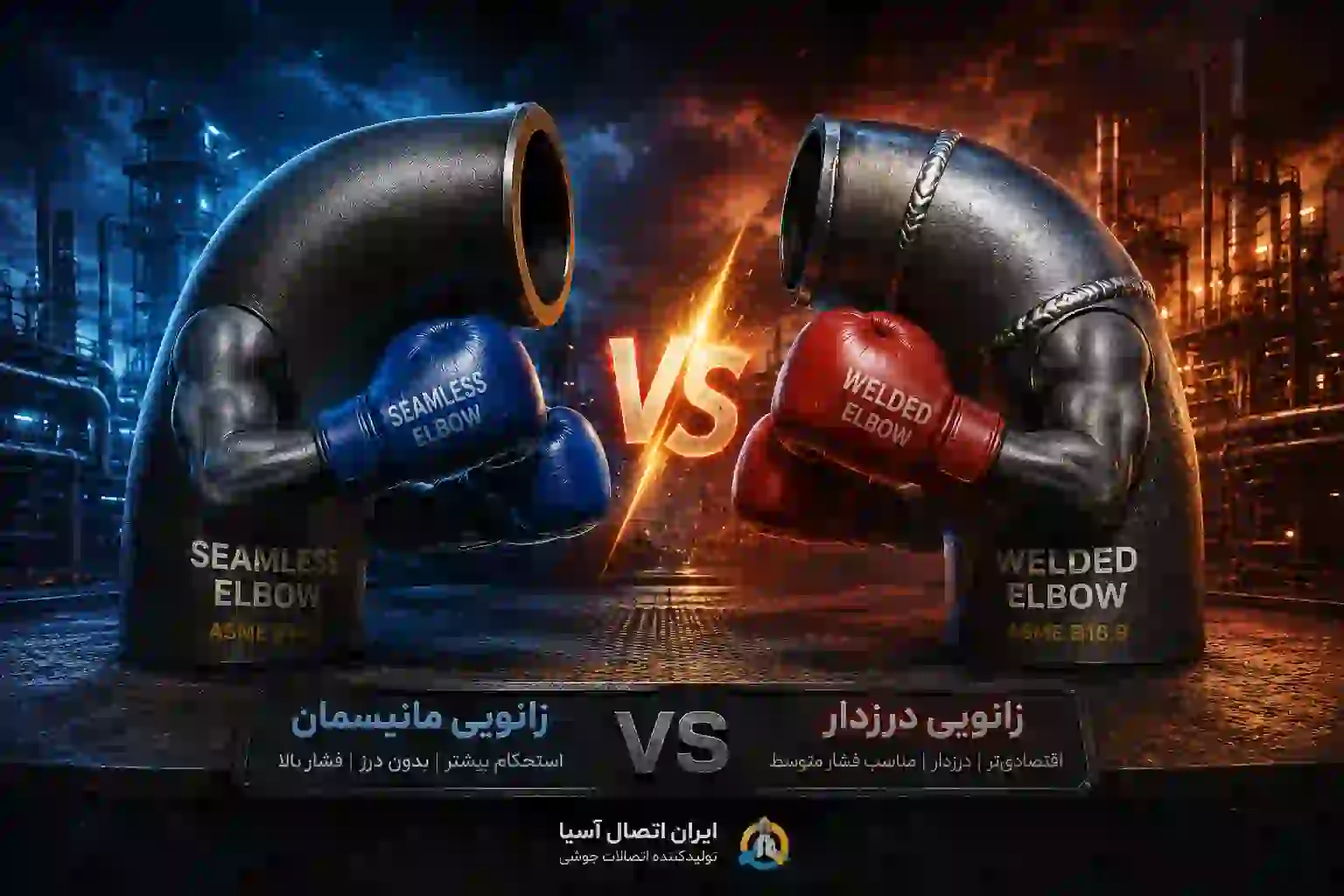
✅ Seamless vs Welded Elbow – Key Differences & Selection Guide
Introduction • Seamless Elbow • Welded Elbow • Manufacturing Difference • Comparison Table • Pressure Ratings • Quality • Quality Control • Applications • Standards • Conclusion
📌 Introduction
The difference between seamless and welded elbows is one of the most critical considerations when selecting butt-weld fittings for industrial piping projects. A common misconception is that these two products differ only in price. In reality, they vary significantly in manufacturing method, mechanical strength, pressure ratings, industrial applications, and inspection standards.
Making the wrong selection can lead to increased project costs or compromised system safety. Therefore, understanding the distinctions between these two elbow types is essential for engineers, contractors, and procurement professionals.
This comprehensive guide examines the seamless vs welded elbow comparison in detail, explaining which type is best suited for specific applications and project requirements.
🔵 What is a Seamless (SMLS) Elbow?
A seamless elbow is manufactured from seamless pipe that contains no longitudinal weld seam. Because the raw pipe has no weld, the finished elbow has a completely homogeneous structure without any potential weld-related weak points.
This type of elbow is typically produced through Hot Forming or Forging processes and is considered the ideal choice for high-pressure and high-temperature piping systems.
✦ Key Features of Seamless Elbows
- No weld seam — complete structural integrity
- Superior mechanical strength
- Higher pressure and temperature ratings
- Excellent resistance to thermal cycling and fatigue
- Ideal for critical and safety-sensitive services
- Superior resistance to stress corrosion cracking
- Reduced inspection requirements (no weld to examine)
🔹 Advantages of Seamless Elbows
- Superior Safety: The absence of a weld seam minimizes leakage and cracking risks.
- Extended Service Life: Structural uniformity enhances resistance to fatigue and cyclic loading.
- Corrosive Environments: Ideal for chemical, oil, and gas applications handling corrosive media.
🔸 Limitations of Seamless Elbows
- Higher Cost: Complex manufacturing processes and premium raw materials increase cost.
- Longer Lead Times: Specialized thermal and forming processes extend production time.
- Size Limitations: Seamless elbows above 24 inches are difficult to manufacture.
🟠 What is a Welded (ERW) Elbow?
A welded elbow is manufactured from ERW (Electric Resistance Welded) or SAW (Submerged Arc Welded) pipe. The welded pipe is first produced, then formed into an elbow through cold or hot forming processes.
This product type features a longitudinal weld seam along its body. When manufactured in accordance with applicable standards and subjected to proper quality testing, welded elbows perform reliably in a wide range of industrial applications.
✦ Key Features of Welded Elbows
- More cost-effective than seamless
- Faster production and wider availability
- Suitable for medium to high pressure services
- Ideal for building services, utilities, and general industry
- Capable of large diameters (up to 48" and beyond)
- Greater supply chain flexibility
🔹 Advantages of Welded Elbows
- Cost Efficiency: Lower price point makes them suitable for budget-conscious projects.
- Greater Availability: Mass production ensures ready stock and faster delivery.
- Large Diameter Capability: Practical solution for sizes exceeding 24 inches.
- Rapid Delivery: Shorter production lead times for urgent project requirements.
🔸 Limitations of Welded Elbows
- Weld Vulnerability: The weld seam can become a stress concentration point and potential crack initiation site.
- Reduced Thermal Shock Resistance: More susceptible to thermal cycling damage than seamless alternatives.
- Stringent Inspection Requirements: The weld seam must undergo extensive non-destructive testing.
- Corrosion Risk: The heat-affected zone (HAZ) around the weld is susceptible to localized corrosion.
⚙️ Manufacturing Process Difference
🔹 Seamless Elbow
- Manufactured from seamless pipe
- No longitudinal weld seam
- Uniform strength throughout
- Process: Hot Forming / Forging
- Quality dependent on billet quality
🔸 Welded Elbow
- Manufactured from ERW / SAW pipe
- Contains longitudinal weld seam
- Quality dependent on weld integrity
- Process: Forming + Welding
- Capable of larger diameters
📊 Seamless vs Welded Elbow Comparison
| Feature | Seamless (SMLS) | Welded (ERW) |
|---|---|---|
| Manufacturing Method | Seamless / No Weld | Welded / ERW / SAW |
| Cost | Higher (30–50% premium) | Lower (More Economical) |
| Pressure Rating | Very High (Class 2500+) | Medium to High (Class 600–1500) |
| Temperature Rating | Excellent (600°C+) | Good (up to 400°C) |
| Fatigue Resistance | Excellent | Good |
| Thermal Shock Resistance | Excellent | Good |
| Wall Thickness Uniformity | Uniform | Less Uniform |
| Primary Applications | Oil, Gas, Petrochemical, Power | Utilities, Water, Building Services |
| Required Testing | UT, RT, PMI, Hydro | UT, Hydro, RT (as required) |
| Size Range | Up to ~24 inches | Up to 48 inches and beyond |
| Wall Thickness | Up to Sch 160 | Typically medium wall |
📌 Pressure Ratings – Which is Better?
For high-pressure applications, seamless elbows are almost always the preferred choice.
The reason is straightforward: seamless elbows contain no weld seam that could serve as a potential weak point. Even with the highest quality welding, welded elbows carry inherent risks of weld defects such as porosity, lack of fusion, or micro-cracks that can lead to failure under high pressure.
Seamless elbows are therefore specified for critical services including:
- High-Pressure Steam Lines
- Oil & Gas Refineries
- Petrochemical and Process Units
- Thermal and Nuclear Power Plants
- High-Pressure Oil and Gas Transmission Lines
- Ultra-High Pressure Hydraulic Systems
Technical Note: Per ASME B31.3 (Process Piping), the design factor for seamless fittings is higher than for welded fittings, reflecting the greater reliability of seamless products in critical service conditions.
❓ Are Welded Elbows Low Quality?
No. This is one of the most common misconceptions in the market.
When manufactured in accordance with ASME B16.9 and using materials that comply with ASTM standards (such as A234 WPB, A420 WPL6, etc.), welded elbows perform reliably in a wide range of projects.
For applications where operating pressure is moderate (below 60 bar) and temperatures are within normal ranges, high-quality welded elbows are often the most cost-effective solution.
The key difference is the level of certainty: Seamless offers minimal risk, while welded offers acceptable performance at a significantly lower cost.
🧪 Quality Control – Seamless vs Welded Elbows
Both product types must undergo quality control testing before release to project sites. However, welded elbows typically require more extensive inspection due to the presence of the weld seam.
Common Testing Methods:
- Visual Inspection (VT): Detection of surface defects
- Dimensional Inspection: Verification of dimensions, angle, radius, and thickness
- Ultrasonic Testing (UT): Detection of internal defects
- Radiographic Testing (RT): Critical for welded elbows to verify weld integrity
- PMI (Positive Material Identification): Chemical composition verification
- Hydrostatic Testing: Pressure integrity verification
- Hardness Testing: Verification of proper heat treatment
- Macro / Micro Examination: Metallographic analysis (especially for welded elbows)
📌 Important Note: For welded elbows, radiographic testing (RT) of the weld seam is mandatory to ensure complete weld integrity. Post-Weld Heat Treatment (PWHT) may also be required to relieve residual stresses.
📄 Industry Standards & Specifications
Both seamless and welded elbows must comply with internationally recognized standards. The most important include:
- ASME B16.9: Dimensional and tolerance specifications for butt-weld fittings
- ASME B31.3: Design and construction standard for process piping
- ASTM A234: Material specification for carbon and alloy steel fittings
- ASTM A420: Material specification for low-temperature fittings
- ASTM A403: Material specification for stainless steel fittings
- MSS SP-75: Heavy-wall fittings for oil and gas transmission
⚠️ Warning: Non-compliance with applicable standards can result in premature failure, leakage, and serious safety incidents. Always source from reputable suppliers with valid quality certifications.
🏭 Industrial Applications – Seamless vs Welded
🔹 Seamless Elbows – Primary Applications
- Oil & Gas (Upstream & Downstream)
- Refineries and Petrochemical Plants
- Power Generation (Thermal, Gas, Nuclear)
- High-Pressure Steam Systems
- Chemical Processing (Corrosive & Toxic Media)
- High-Pressure Hydraulic Systems
- Offshore Platforms and Marine Applications
🔸 Welded Elbows – Primary Applications
- Municipal and Industrial Water Supply
- Building Services and HVAC Systems
- General Manufacturing Plants
- Water and Wastewater Treatment
- Fire Protection Systems
- Infrastructure and Civil Projects
- Cooling Water Systems
🎯 Selection Guide – Seamless vs Welded Elbow
✅ Choose Seamless When:
- Operating pressure above 60 bar (Class 900+)
- Operating temperature above 400°C
- Corrosive, toxic, or flammable media
- Safety-critical applications
- Frequent thermal cycling
- High-budget, high-sensitivity projects
✅ Choose Welded When:
- Operating pressure below 60 bar (Class 600 or lower)
- Operating temperature below 400°C
- Non-corrosive media (water, air, oil)
- Budget-constrained projects
- Large diameter required (above 24")
- Building services and utility projects
- Urgent delivery requirements
📌 Final Conclusion
If your project involves high pressure, high temperature, or critical service conditions, seamless elbows are the more reliable choice.
However, for standard industrial and utility applications with moderate operating conditions, high-quality welded elbows offer excellent performance at a significantly lower cost.
More important than the type of elbow is procuring products manufactured in accordance with recognized standards, subject to proper quality control, and supplied by reputable manufacturers. Verifying the availability of NDT reports and quality certificates (such as EN 10204 3.1 or 3.2) is essential.
🏭 Iran Etesal Asia Steel Industries
Premium Butt-Weld Elbows • Seamless & Welded • LR & SR • ASME B16.9
Contact us for consultation and price inquiries.
🔗 Reference Links
📚 Related Articles
🏭 Iran Etesal Asia Steel Industries
Iran Etesal Asia Steel Industries is a leading manufacturer of butt-weld fittings including elbows, tees, reducers, caps, and other piping components. Produced in accordance with international standards and backed by comprehensive quality control, our products serve both domestic industrial needs and export markets worldwide.
This article was prepared as a purchasing guide for butt-weld fittings.
Published: July 2026 • Last Updated: July 2026 • Source: Iran Etesal Asia Steel Industries