Natural Gas Pipe
🔧 Complete Guide to Gas Pipe: Types, Standards, Fittings & Safety
A comprehensive reference from selecting a gas pipe to standard fittings based on ASME B16.9
📑 Table of Contents
- 1. What is a Gas Pipe?
- 2. Applications of Gas Pipes
- 3. Importance of Safety in Gas Piping
- 4. Material and Structure of Gas Pipes
- 5. Types of Gas Pipes by Material
- 6. Gas Pipe in Exposed and Concealed Installations
- 7. Standards for Pipes and Fittings
- 8. Butt Weld Fittings and Their Types
- 9. Maintenance and Inspection of Gas Pipes
- 10. Iran Etesal and Standard Products
- 11. Conclusion
- 12. FAQ
1. What is a Gas Pipe?
A gas pipe is one of the most critical infrastructural components in natural gas and LPG transmission and distribution systems. These pipes are responsible for transporting gas from the production source or network inlet to the end consumer with high safety, minimal leakage, and maximum durability. Due to the hazardous nature of gas, the selection, installation, and maintenance of gas pipes are highly sensitive and must comply with technical and safety standards.
In residential, commercial, and industrial buildings, gas pipes play a vital role in supplying energy for heating systems, cooking appliances, and industrial equipment. Any defect in pipe quality or improper installation can lead to leaks, explosions, or fires. Therefore, a precise understanding of gas pipes is crucial for contractors, engineers, and consumers.
A Brief History of Gas Piping
The use of pipes for gas transmission dates back to the 19th century when town gas was produced from coal. Cast iron pipes were used at that time. With the advancement of the industry and the discovery of natural gas, steel pipes replaced cast iron, and today, with precise standards like ASME and API, safety and efficiency have reached unprecedented levels.
2. Applications of Gas Pipes
Depending on the project type and gas pressure, gas pipes are used in various applications, including:
- Residential Buildings: Supplying gas to stoves, boilers, heaters, and water heaters.
- Commercial Buildings: Restaurants, hotels, shopping centers, and industrial kitchens.
- Industrial Applications: Factories, power plants, and manufacturing workshops.
- Urban Networks: Distributing gas from pressure reduction stations to different city areas.
- Petrochemical Industries: Conveying special and corrosive gases in refineries.
In each of these applications, the type, thickness, material, and installation method of the pipe can vary. For instance, in high-pressure transmission lines (above 100 bar), thick seamless pipes are used, while for urban distribution networks, welded or polyethylene pipes are sufficient.
3. Importance of Safety in Gas Piping
⚠️ Warning: Safety is the most critical factor in selecting and using gas pipes. Natural gas is colorless and odorless (an odorant is artificially added), and in case of a leak, it can become a serious hazard without warning.
Therefore:
- The gas pipe must be resistant to pressure and impact.
- Fittings must be completely sealed and standard.
- Pipes with valid certifications and standard marks must be used.
- Installation must be carried out by qualified specialists.
- The system must include emergency shut-off valves and gas detectors.
Using substandard or non-standard pipes might seem cheaper in the short term, but in the long run, it incurs irreparable costs. Gas leaks not only pose an explosion risk but can also lead to suffocation and poisoning.
4. Material and Structure of Gas Pipes
Gas pipes are typically made of specific metallic or polymeric materials that can withstand gas pressure and environmental conditions. The structure of these pipes is designed to:
- Be resistant to corrosion and rust.
- Not crack or fail due to temperature changes.
- Not degrade or leak over time.
- Withstand mechanical stresses from earthquakes or soil settlement.
The choice of pipe material depends on factors such as installation location (exposed or concealed), climatic conditions, gas pressure, and local regulations.
5. Types of Gas Pipes by Material
5-1. Carbon Steel Pipe
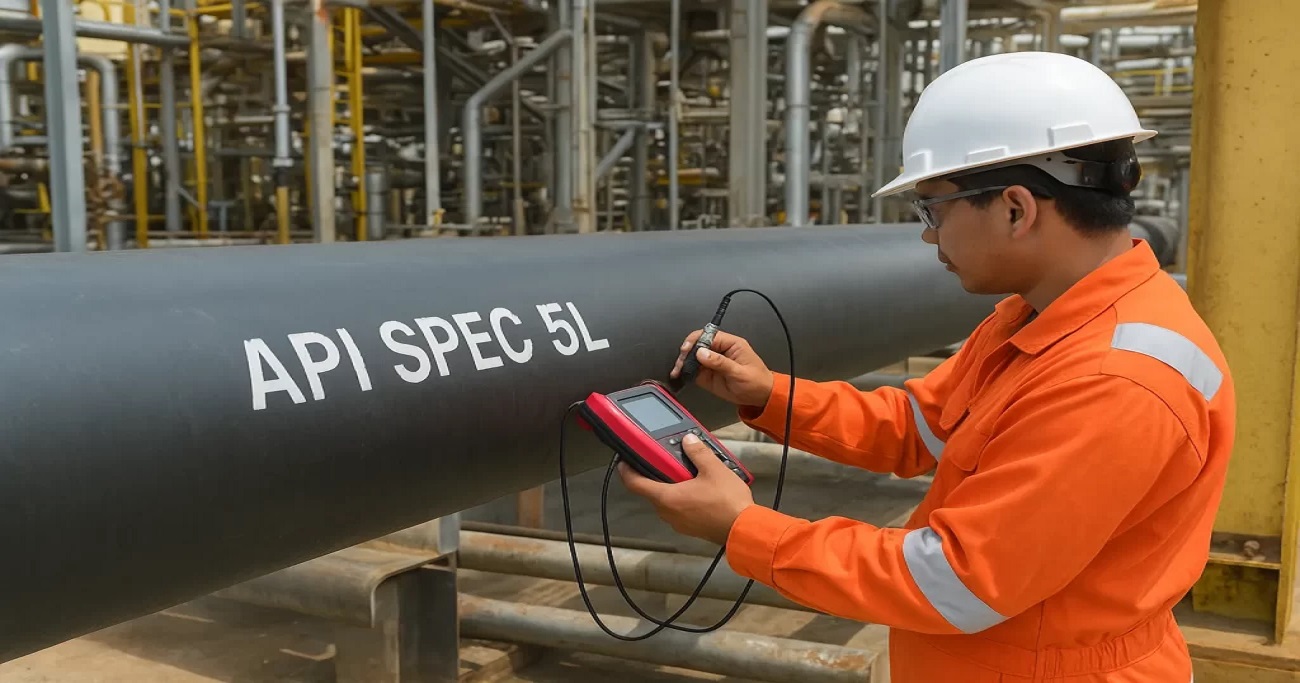
The most common and widely used type of gas pipe is carbon steel pipe. These pipes are produced according to API 5L and ASTM A106 standards and are available in two types: seamless and welded (ERW / LSAW).
- Seamless Pipe: Made from a steel billet that is formed into a pipe without any welded seam. This type is suitable for high pressures (up to 1000 bar) and high temperatures and is used in main gas transmission lines.
- Welded Pipe (ERW): Made from steel plates that are formed into a cylinder and seam-welded. It is more cost-effective and is used for medium pressures (up to 100 bar) and urban distribution lines.
- Spiral Pipe (SAWH): Used for large diameters (above 20 inches) and lower pressures.
Common carbon steel grades for gas pipes include Gr.B, X42, X52, X60, and X70, each with different yield strengths.
5-2. Alloy Steel Pipe
In high-temperature environments (above 400°C) or corrosive environments (containing hydrogen sulfide), alloy steel pipes with chromium, molybdenum, and vanadium additives are used. ASTM A335 is a common standard for these pipes, with grades P11, P22, P91, and P5 being the most well-known.
5-3. Galvanized Pipe
Galvanized pipe is steel pipe coated with a layer of zinc to resist rust. These pipes are mostly used for low-pressure indoor applications (less than 5 bar) in residential buildings. However, in many new standards, the use of galvanized pipe for gas is prohibited or restricted because the zinc coating may react with some gas compounds, creating flaking scales that can cause blockages or leaks. Instead, black steel pipe is recommended.
5-4. Polyethylene (PE) Pipe
In low-pressure urban gas distribution networks (maximum 4 bar), polyethylene pipes are used. These pipes are lightweight, flexible, resistant to soil corrosion and chemicals, and are joined by electrofusion or butt fusion welding. ISO 4437 and ASTM D2513 are the main standards for these pipes.
5-5. Copper Pipe
In some small, low-pressure installations, copper pipe is used for gas. Copper is corrosion-resistant and easy to solder, but due to its high cost and softness, it has limited applications and is mostly used in specific countries.
Comparison Table of Gas Pipe Types
| Pipe Type | Material | Working Pressure (bar) | Main Application |
|---|---|---|---|
| Seamless | Carbon Steel | Up to 1000 | High-pressure main lines |
| ERW Welded | Carbon Steel | Up to 100 | Urban and industrial distribution |
| Alloy Steel | Cr-Mo | Up to 600 | High temperature and corrosion |
| Polyethylene (PE) | Polymer | Up to 4 | Urban distribution network |
| Galvanized | Steel with zinc coating | Up to 5 | Indoor (in some regions) |
6. Gas Pipe in Exposed and Concealed Installations
One of the common classifications in gas piping installation is the method of installation, which is divided into two types: exposed and concealed:
- Exposed Piping: Pipes are installed on the wall or ceiling and are fully visible. Advantages: easier repair and inspection, lower installation cost, quick leak detection. Disadvantages: unattractive appearance, vulnerability to impact. This method is mostly used in industrial spaces, parking lots, and boiler rooms.
- Concealed Piping: Pipes are placed inside wall chases or floors and then covered with plaster or cement. Advantages: neat and uniform appearance, protection of pipes from impact. Disadvantages: higher cost, difficulty in repair and leak detection, need for very high quality in execution and precise testing before covering.
📌 Technical Note: In concealed piping, it is mandatory to use high-quality seamless pipes and standard butt weld fittings (not threaded) to prevent any leaks in the long term. Also, all welds must be performed by a certified welder and undergo non-destructive testing (e.g., radiography).
7. Standards for Pipes and Fittings
Gas pipes and related fittings must be manufactured and installed according to national and international standards. The most important standards include:
- ASME B16.9: The primary standard for dimensions, tolerances, thickness, and testing methods of butt weld fittings including elbows, tees, reducers, and caps. View ASME B16.9 details on Iran Etesal
- API 5L: Technical specifications for steel pipes used in oil and gas pipeline systems.
- ASTM A106 / A53: Standards for carbon steel pipes for high and low-temperature service.
- ASTM A234: Material specifications for carbon and alloy steel butt weld fittings.
- ASME B31.8: Design and installation standards for gas transmission and distribution piping systems.
- ISO 3183: International standard for steel pipes in the oil and gas industry.
- MSS SP-75: Standard for high-diameter butt weld fittings (above 26 inches).
Compliance with standards is not only a legal requirement but also ensures the safety and longevity of the gas distribution system.
8. Butt Weld Fittings and Their Types
Butt weld fittings are the most widely used type of fittings in high-pressure and high-temperature gas pipelines. These components are connected to the pipe via butt welding, which ensures complete integrity, zero leakage, and excellent mechanical strength. View types of butt weld fittings on Iran Etesal
8-1. Elbow – Intelligent Direction Change
Elbows are used to change the direction of gas flow in pipes. The two main parameters in selecting an elbow are the angle (usually 45° and 90°) and the radius of curvature (Long Radius or Short Radius). In gas lines, Long Radius (1.5D) elbows are preferred because they create less pressure drop.
- 90° Long Radius (LR) Elbow: The most common type for main lines.
- 45° Elbow: For gentle direction changes.
- 90° Short Radius (SR) Elbow: Used in tight spaces and lower pressures.
For precise dimensions, weights, and tolerances of various elbows according to ASME B16.9, visit the Elbow Dimensions page on Iran Etesal.
8-2. Tee – Branching Off
Tees are used to create a 90° branch from the main pipeline. There are two main types:
- Equal Tee: The branch diameter is equal to the main pipe diameter.
- Reducing Tee: The branch diameter is smaller than the main pipe, used for sudden diameter reduction.
In gas lines, welded tees are far superior to threaded or flanged fittings due to their high pressure tolerance and weld integrity. View detailed Tee dimensions according to ASME B16.9
8-3. Reducer – Diameter Adjustment
Reducers are used to reduce or increase the pipe diameter in the flow path and come in two main types:
- Eccentric Reducer: Used to maintain the bottom level of the pipe and prevent liquid accumulation (less common in dry gas lines).
- Concentric Reducer: The most common type in gas lines, keeping the center of the pipes aligned.
The choice of reducer depends on flow conditions, installation method, and the type of fluid. View Reducer dimensions according to ASME B16.9
8-4. Cap and Other Fittings
Caps are used to close the ends of pipes. Other fittings like Stub Ends and Crosses are also used in some special applications.
9. Maintenance and Inspection of Gas Pipes
Gas pipes, even when properly installed, require periodic inspections. Regular inspection can prevent serious accidents. Items to check include:
- Rust or corrosion on the pipe surface and fittings.
- Loosening of mechanical connections (threads, flanges).
- Unusual gas odor in the environment.
- Physical damage from impact, digging, or construction.
- Deformation or warping of pipes.
- Proper operation of shut-off and safety valves.
🚨 Warning: If you notice any suspicious signs (gas smell, hissing sound, or flame color change), immediately shut off the gas at the main valve, ventilate the area, and contact a specialist. Never use matches or electrical switches to detect leaks.
It is recommended that the gas piping system be inspected by a qualified person at least once a year. In commercial and industrial buildings, these inspections should be more frequent (every 6 months).
10. Iran Etesal – Supplier of Standard Gas Fittings
Iran Etesal is a leading supplier and manufacturer of various butt weld and non-weld fittings used in the oil, gas, and petrochemical industries. All products, including elbows, tees, reducers, caps, and flanges, are manufactured from standard pipes (according to ASTM A234 and API 5L) and are subject to strict quality control, complying with ASME B16.9 requirements.
Advantages of Iran Etesal products:
- Use of high-quality steel plates and pipes (crack-resistant and defect-free).
- Full compliance with ASME B16.9 and MSS SP-75.
- Provision of Material Test Certificates (MTC) with each product.
- Coverage of sizes from ½ to 48 inches and various thicknesses (Sch 10 to Sch 160).
- Production using advanced hydraulic press and arc welding machinery.
- Free technical consultation for selecting the best fitting for your project.
🔹 Smart Choice: For technical consultation, price inquiries, and availability of butt weld fittings and piping tools, visit the following pages:
Iran Etesal also offers piping tools including weight calculators, tolerance tables, and selection guides to help engineers and contractors make the best decisions for their projects. View Iran Etesal Piping Tools
11. Conclusion
Proper selection of gas pipes and standard fittings not only affects efficiency and reduces maintenance costs but is also the most critical factor in ensuring the safety of personnel, residents, and equipment. This article aimed to cover all aspects related to gas pipes – definition, material types, installation methods, standards, fittings, and maintenance.
Key points to always keep in mind:
- Always use pipes and fittings with certification according to recognized standards like ASME B16.9, ASTM A234, and API 5L.
- Entrust gas piping installation only to qualified and certified professionals.
- For concealed piping, always use seamless pipes and welded fittings, and test all welds.
- Maintain a regular inspection schedule and take immediate action if you notice any issues.
- Partnering with reputable suppliers like Iran Etesal, who manufacture products from standard pipes and provide full technical documentation, guarantees quality and peace of mind.
📞 For technical consultation, price quotes, and a complete catalog of butt weld fittings, contact Iran Etesal specialists.
❓ Frequently Asked Questions (FAQ) About Gas Pipes
1. What is the best type of pipe for residential gas piping?
For residential buildings, black steel pipe (uncoated) according to API 5L or ASTM A53 is the most common choice. For luxury projects or humid areas, copper or stainless steel pipes are used. For concealed installations, seamless pipes are mandatory.
2. What is the difference between exposed and concealed gas piping?
Exposed piping is installed on walls; it is easier to repair and inspect but less aesthetically pleasing. Concealed piping is embedded in walls or floors; it looks better but costs more and is harder to repair in case of leaks.
3. What is the purpose of the ASME B16.9 standard?
ASME B16.9 is the primary standard for the dimensions, tolerances, thickness, and testing methods of butt weld fittings such as elbows, tees, reducers, and caps. All butt weld fittings used in high-pressure gas lines must comply with this standard. View full standard details
4. Is it permissible to use galvanized pipe for gas?
In many new standards, the use of galvanized pipe for gas is prohibited or restricted because the zinc coating can react with some gas compounds, creating flaking scales that cause blockages or leaks. Black steel pipe is the recommended alternative.
5. How can I tell if a gas pipe is leaking?
Signs of a gas leak include an unusual odor (city gas has an added odorant), a hissing sound near connections, flame color change from blue to orange or yellow, and dead plants in the pipe path. If in doubt, use soapy water to detect the leak – never use matches or open flames.
6. What is the difference between a Long Radius and Short Radius 90° elbow?
Long Radius (LR) elbows have a larger radius of curvature (1.5 times the pipe diameter) and create less pressure drop, making them ideal for main gas lines. Short Radius (SR) elbows have a smaller radius (equal to the pipe diameter) and are used in tight spaces but create higher pressure drops. View detailed elbow specifications
7. How often should gas pipes be inspected?
It is recommended to have the gas piping system inspected by a qualified person at least once a year. In commercial and industrial buildings, inspections should be every 6 months. Also, after any repair work, excavation, or earthquake, an immediate inspection is required.
8. Are butt weld fittings better than threaded fittings?
Butt weld fittings are far superior for high-pressure and high-temperature gas lines due to their complete integrity, zero leakage, and high mechanical strength. Threaded fittings are only recommended for low pressures (below 10 bar) and small diameters (up to 2 inches). View types of butt weld fittings
🌍 International Products (Translated)
Visit our international product pages for detailed technical information in multiple languages:
👉 Access International Products Hub
Includes translated versions of ASME B16.9, Elbow, Tee, Reducer, Butt Weld Fittings, and Piping Tools
🇮🇷 Main Products (Persian)
For detailed technical specifications, dimensional tables, and selection guides in Persian, visit these pages:
📚 Related Articles (English)
Read more in-depth articles on gas pipe fittings, standards, and industry insights:
🌐 External References & Resources
For more detailed information on standards, dimensions, and testing methods, the following official links are recommended:
* All internal links point to Iran Etesal's English or Persian pages, containing technical information, dimensional tables, and selection guides.
✍️ Prepared by Iran Etesal Content Team – The Specialist Reference for Piping Fittings
This article is updated and contains over 4500 words of SEO-optimized content, tables, and practical technical tips.